Twizu: Software Systems & Engineering for the AI Era.
Intelligent Software. Connected Systems. Practical Innovation.
Twizu designs, builds and integrates software that solves business problems, connects existing technologies and enables intelligent automation. From bespoke applications to AI-enabled systems we combine engineering expertise with commercial understanding,
to deliver purposeful, reliable technology, built around real operational needs.
Software Engineered with Purpose. Built for the Real World.
Software That Connects. Automates. Improves.
The starting point is the requirement. The value is the improvement delivered.
Imagine customer enquiries being handled promptly, information flowing between your business systems, routine administrative work happening automatically, or a specialist application designed around exactly how your organisation operates. These are some of the possibilities that modern software engineering can make achievable.
We develop business applications, intelligent automations, integrated systems and SaaS platforms to help you work more effectively and introduce new capabilities. From internal business platforms and customer-facing applications, to intelligent automation and commercial SaaS products, well-engineered software can connect information, simplify operations and open up new opportunities.
At Twizu, we combine software engineering with practical business understanding to develop solutions around real operational needs. That may involve building a new application, connecting existing CRM or ERP systems, introducing AI capabilities or improving software already in use.
Software engineering brings ideas, business requirements and technology together to create applications and systems that people can put to work. It encompasses both the software we use and the disciplined process of designing, developing, integrating and maintaining it.
We start with what you want to achieve, then determine how to to make it happen.
What can we build for your business?
Practical Software Systems For Businesses & Organisations
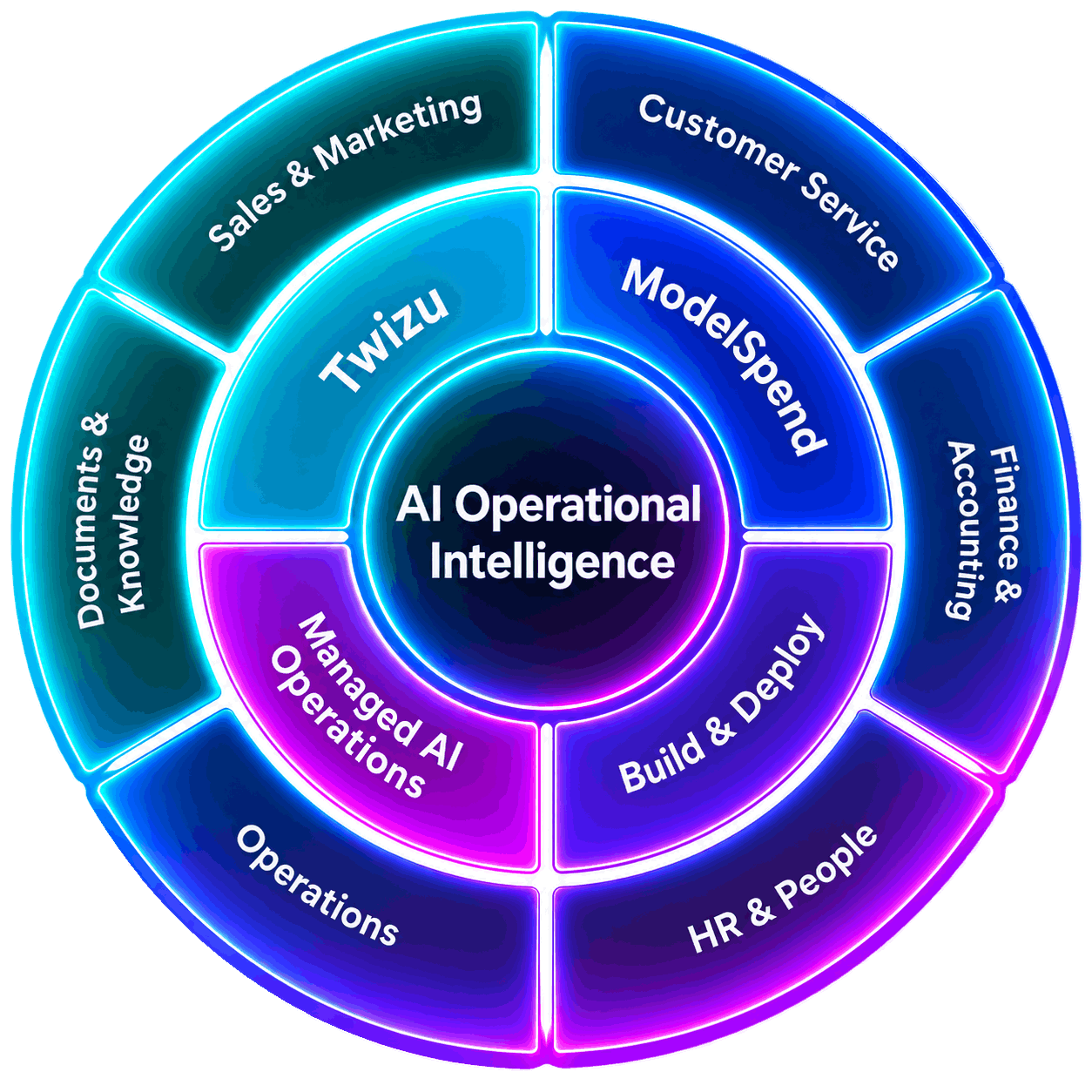
Twizu designs and engineers solutions for real operational requirements, from focused tools and AI-assisted workflows to integrated business applications and SaaS platforms. Explore some of the practical ways we can put software to work for your business.
Business Applications, CRM & ERP Systems
Customer Relationship Management (CRM) and Enterprise Resource Planning (ERP) systems are central to how many organisations manage customers, resources, finances and operations.
Bespoke software can extend existing CRM or ERP platforms, connect them with other applications or provide specialist functionality where standard systems fall short.
Practical applications: Sales pipelines, customer records, quotation and order management, inventory, job scheduling, project tracking, approvals, invoicing and management reporting.
AI Customer Service & Communications
Customer-facing AI applications can help organisations manage enquiries, improve response times and provide more consistent access to information.
Solutions may include AI telephone receptionists, call handling and appointment booking, website chat assistants, email triage and customer support systems connected to existing knowledge bases or CRM platforms.
Practical applications: Answering routine enquiries, routing calls, creating support tickets, booking appointments, drafting responses and escalating sensitive or complex cases to people.
Workflow Automation & AI Agents
Many business processes involve repetitive activities across email, spreadsheets, documents and disconnected applications.
We develop workflow automations and AI-enabled agents that can interpret information, coordinate tasks and interact with approved systems. Some processes are best handled through conventional automation; others benefit from AI's ability to work with less structured information.
Practical applications: Email classification, data extraction, document processing, report preparation, record updates, task allocation, approval workflows and notifications.
HR, Finance & Operational Systems
Internal business functions frequently depend on information being transferred between people and systems, often through manual processes.
Purpose-built applications and integrations can support more consistent workflows, clearer accountability and better access to operational information.
Practical applications: Employee onboarding, HR administration, leave and training records, expenses, invoice processing, purchase approvals, financial reconciliation, resource planning and operational dashboards.
Customer Portals & Industry-Specific Applications
Standard business software cannot always accommodate specialist workflows, sector requirements or the way an organisation interacts with its customers.
Twizu can develop web-based applications and secure portals that bring information, processes and services together in an accessible, manageable environment.
Practical applications: Customer self-service, document exchange, bookings, membership management, field-service applications, compliance records, project collaboration and specialist operational tools.
SaaS Platforms & Digital Products
Software as a Service (SaaS) provides applications through a hosted platform, typically allowing customers to access functionality through a browser and, where appropriate, pay through subscriptions or usage-based plans.
Twizu engineers software products that can support multiple customers, user roles, subscriptions, integrations and evolving feature requirements.
Practical applications: Commercial SaaS products, multi-tenant business platforms, subscription applications, industry-specific software, customer dashboards and AI-enabled digital services.
Our own ModelSpend platform provides an example of Twizu's product engineering approach, combining multiple operational and financial intelligence capabilities within a distinct software product.
Working with Twizu
From First Conversation to a Clear Plan.
Starting a software project should feel straightforward, whether you have a fully formed idea or simply know what you'd like to achieve. We'll help you explore the possibilities, understand the requirements and establish a practical way forward. From your first conversation to a clear proposal, you'll know what to expect and what's needed from you at each stage. Here's how working with Twizu typically begins.
01 / Let's Talk About Your Project
Tell us what you'd like to achieve, improve or create. This could be a new SaaS product, a business application, an AI automation or an integration between existing systems.
We'll arrange an introductory conversation to understand your priorities, discuss any known constraints and establish whether Twizu is a suitable engineering partner.
What you'll gain: A clearer understanding of the next step and whether further assessment is needed.
02 / Initial Assessment & Discovery
We'll consider your objectives, existing technology, intended users, integrations, available information and any significant technical or commercial constraints.
Straightforward requirements may need only a focused assessment. More complex projects may justify a separately scoped discovery or feasibility exercise.
What you'll gain: An initial assessment of potential approaches, major considerations and the information needed to define the work responsibly.
03 / A Proposal You Can Evaluate
Once the requirement is sufficiently understood, we'll prepare a proposal outlining the recommended approach, expected deliverables, responsibilities, indicative delivery schedule and costs.
Where significant uncertainties remain, we'll identify them and explain how they can be resolved before committing to full development.
What you'll gain: A documented basis for deciding whether, when and how to proceed.
04 / Agreed Development & Delivery
With the scope and commercial arrangements agreed, we can begin engineering your solution.
You'll have opportunities to review progress, provide feedback and participate in testing as the project develops. Deployment, handover and any ongoing support requirements are agreed as part of the project arrangements.
What you'll gain: An agreed delivery process, with defined expectations and appropriate opportunities for review.
Project Timescales & Costs: What to Expect.
From enquiry to proposal, you'll know what happens next, what's involved and when to expect the next update.
Timescales From Enquiry to Proposal
We aim to respond promptly to new enquiries and arrange an initial conversation at a mutually convenient time.
Following that discussion, we'll explain the next steps and give you an indication of the time needed to assess your requirements and prepare a proposal.
Typical Timescales:
- Acknowledgement of enquiry — 1-2 days
- Initial Assessment— 3-5 days straightforward requirements
- Paid Detailed Discovery— 1-3 weeks depending on scope
- Development Proposal — Following assessment / discovery
- Project Delivery — Estimated and agreed individually
Straightforward projects may be relatively quick to assess.
More complex applications, integrations or SaaS platforms may require additional discovery before we can provide reliable estimates.
What Might Your Software Project Cost?
Every software project is different, but understanding likely investment is an important part of deciding how to proceed.
Costs depend on the scope of the work, the complexity of the software, the systems it needs to connect with and the requirements for testing, deployment and ongoing support.
We aim to establish an indicative budget as early as practical giving you the opportunity to assess whether the proposed approach makes commercial sense before committing to development expenditure.
Straightforward requirements may be suitable for a direct estimate. More complex projects may benefit from a separately priced discovery or feasibility assessment, with its scope and cost agreed in advance.
We'll also identify relevant ongoing costs, such as hosting, software licences, AI usage and maintenance, so you can consider the wider cost of ownership rather than the initial development price alone.
Frequently Asked Questions
Do I need a technical specification before contacting Twizu??
No. You can start with an idea, an existing operational problem or a description of what you'd like your software to accomplish. We'll help establish what information is needed to assess the requirement and recommend a suitable approach.
How long does bespoke software development take?
A focused integration or improvement may take a few weeks, while a new application, complex automation or SaaS platform may require several months. We'll discuss likely timescales early and agree a more detailed delivery plan once the work has been scoped.
Will I receive a written proposal and cost estimate?
Yes. Before undertaking agreed development work, we'll establish the proposed scope, deliverables, pricing arrangements and expected delivery stages. If detailed technical discovery is required, its scope and cost will be agreed separately.
What happens after my software is launched?
We can discuss appropriate arrangements for documentation, training, monitoring, maintenance and further development. The level of ongoing support depends on the solution and will be agreed rather than assumed.
What we engineer
The Engineering Expertise
Behind the Software
Software engineering brings ideas, business requirements and technology together to create applications and systems that people can put to work. It encompasses both the software we use and the disciplined process of designing, developing, integrating and maintaining it.Our engineering capabilities can be combined according to the needs of the project.
1. Bespoke Software & Applications
Purpose-built applications provide capabilities that conventional software may not offer, or bring together functions that would otherwise remain fragmented across multiple tools.
Twizu develops software around defined operational requirements, with attention to usability, integration, data handling and the ability to adapt as needs change.
The objective is not bespoke development for its own sake, but software that addresses a genuine need more effectively than available alternatives.
2. Systems Integration & APIs
Business information frequently moves between applications, databases, platforms and external services. When those systems cannot communicate effectively, people are left to bridge the gaps manually.
We design integrations and API-based connections that allow systems to exchange information, coordinate processes and support more reliable workflows.
This can include connecting established business applications with new software or AI capabilities, without unnecessarily replacing the systems already in use.
For example, connecting a CRM with accounting, stock management or customer support systems can reduce duplicate data entry and help teams work with more consistent information.
3. AI Integration & Intelligent Applications
AI can extend what software is capable of doing, from interpreting information and assisting with decisions to supporting more complex tasks and workflows.
We integrate suitable AI models and services into applications and operational processes, considering their performance, cost, security, limitations and appropriate level of human oversight.
The aim is to use AI where it adds demonstrable value, rather than introducing it simply because the technology is available.
4. Workflow Automation & AI Agents
Repetitive activities, disconnected processes and unnecessary manual steps can consume valuable time and introduce avoidable errors.
Twizu develops automated workflows and agent-enabled systems that connect tasks, information and software services. Depending on the requirement, these may be conventional rule-based automations, AI-assisted processes or more autonomous systems operating within defined boundaries.
Effective automation requires appropriate controls, visibility and recovery arrangements, particularly when systems can take action without continuous human involvement.
Applications can include AI-assisted telephone and email handling, customer support, document classification, HR administration and automated information processing, with appropriate human review and escalation where required.
5. Governance, Monitoring & Operational Intelligence
Software needs to remain understandable and manageable after deployment, especially when it involves multiple services, automated decisions or ongoing usage costs.
We engineer visibility, monitoring and suitable control mechanisms into systems so that organisations can understand how their technology is performing, identify problems and retain operational accountability.
For AI systems, this can extend to model usage, routing decisions, expenditure, governance policies and financial forecasting, connecting software engineering with AI Operational Intelligence.
6. Software Improvement & Modernisation
Not every requirement calls for an entirely new system. Existing software may already contain valuable capabilities, but be constrained by outdated components, fragile integrations or processes that have evolved beyond their original design.
We assess opportunities to improve, extend or modernise applications, with attention to dependencies, maintainability, performance and operational continuity.
Where appropriate, targeted improvements can provide a more proportionate solution than wholesale replacement.
Software engineering in practice
ModelSpend: By Twizu
ModelSpend is a distinct software product developed built around a real operational challenge, with its own identity and website. It is Twizu's own purpose-built AI governance and financial intelligence software, developed to address the increasing complexity of managing AI usage across models, providers, applications and organisational requirements.
The platform connects four capabilities: expenditure visibility & attribution, intelligent model routing, governance & financial control, forecasting & optimisation, all working together as a coherent software system, rather than unrelated tools or reporting features.
ModelSpend illustrates an important principle behind Twizu's engineering approach: technology becomes more valuable when individual components work together to address a wider operational requirement. Its interactive Mission Control demonstration provides an opportunity to explore the product experience using simulated data.
Discover the story behind ModelSpend at Twizu →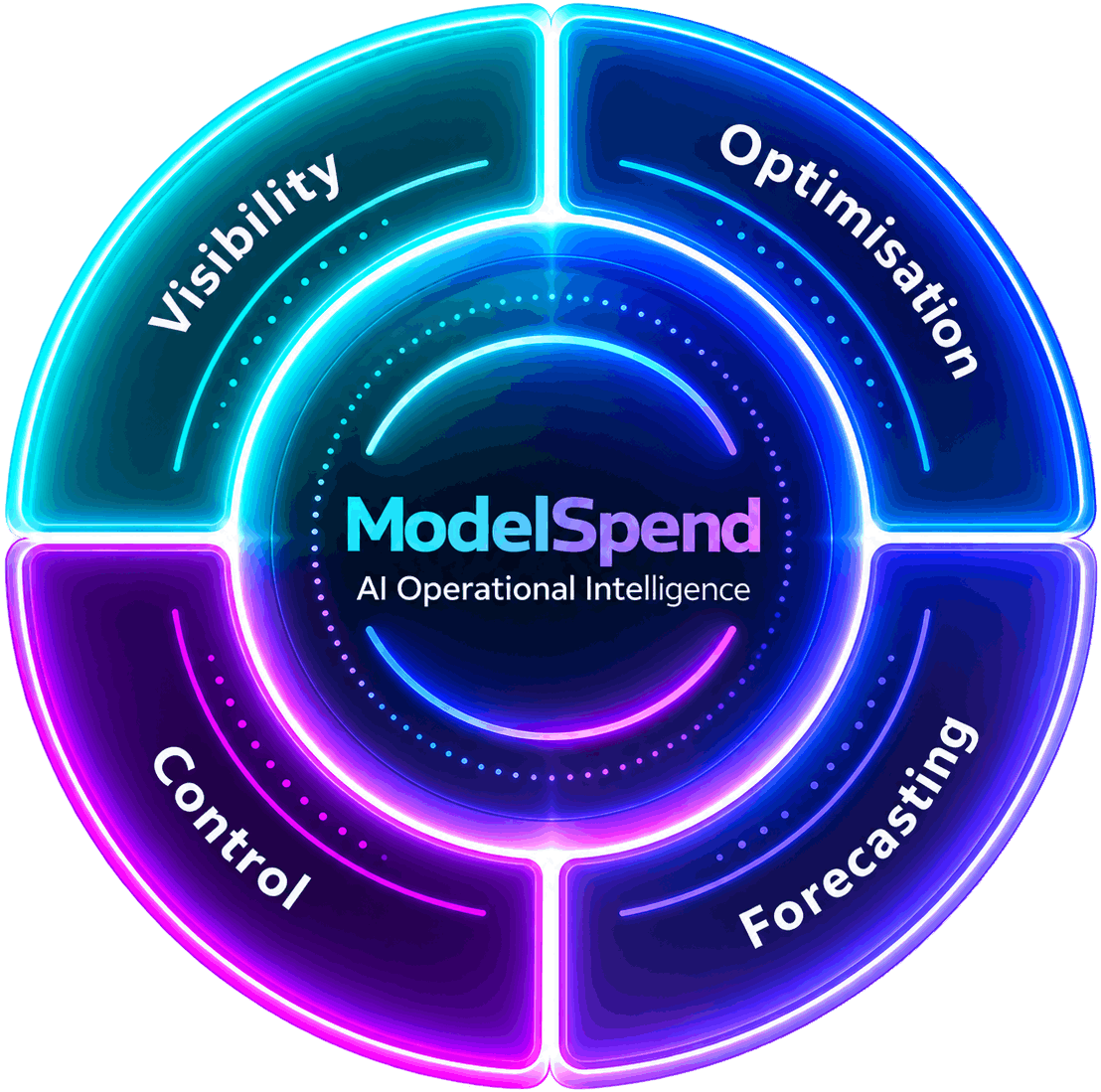
Discuss Your Software Project
Explore how Twizu engineers and integrates AI software around your business requirements.
Explore ModelSpend
Discover our AI governance and financial intelligence product, or explore the simulated Mission Control experience.